Raspberry support for FireCapture v2.6 and ZWO cameras !
| Compatibility |  FC v2.7.15 (x64) |
 FC v2.7.15 (x64) |
 FC v2.7.15 (x64) |
FC v2.7.15 (aarch64) |
|
|---|---|---|---|---|---|
 Altair Altair |
 |
 |
|
|
|
 ASCOM ASCOM |
 |
|
|||
 Basler Basler |
|
|
|||
 FLIR/FlyCap FLIR/FlyCap |
 |
|
|||
| FLIR/Spinnaker |
|
|
|||
 LUCID LUCID |
|
|
|||
 NexImage NexImage |
|
|
|||
 OGMA OGMA |
|
|
|
|
|
 PlayerOne PlayerOne |
|
|
|
|
|
 QHY QHY |
|
|
|
|
|
 Skyris Skyris |
|
|
|||
 SVBony SVBony |
|
|
|
|
|
 TIS
TIS |
|
|
|||
 Touptek/Omegon Touptek/Omegon |
|
|
|
|
|
 ZWO ASI ZWO ASI |
 |
|
|
|
|
Older Versions
Developing software is mostly fun, but it also takes up nearly all of my spare time. If you find FireCapture useful and would like to support me in continuing development you're welcome to donate a small amount of your choice.


The mystery surrounding Sone174 will likely continue to fascinate online communities, and their impact on the digital world will be worth monitoring in the years to come.
If you are researching a purchase, checking the exact spacing (e.g., searching for "1 sone 174 CFM" versus the combined media code) will quickly filter out irrelevant search results.
To put 114.4 dB (174 sones) into perspective, consider the following environmental noise benchmarks: Sone Level Approximate Decibels (dB) Real-World Acoustic Example A quiet residential library or light humming refrigerator. Moderate rainfall or a quiet office workspace. Normal conversational speech at a distance of three feet. Heavy city traffic or a ringing alarm clock. A gas-powered lawnmower or a pneumatic jackhammer nearby. 114.4 dB
This innovation, known colloquially as the "Sone174 Algorithm," is now used by silent PC manufacturers like Noctua and be quiet! to tune their premium lines.
Then move on, quietly, as if you never heard anything at all. sone174
Depending on the sector, the keyword operates across three primary domains: Industrial Acoustics and HVAC Design
In the vast, ever-expanding universe of digital identifiers, model numbers, and online aliases, certain strings of characters take on a life of their own. One such enigma that has been generating quiet but significant buzz is . At first glance, it appears to be a simple alphanumeric code—a product number, a username, or a classification. However, for those in the know, "sone174" represents a fascinating intersection of technology, niche fandom, and digital utility.
Kael is summoned by the High Auditor. An anomaly has been detected. It’s a recurring signal that bypasses the city's jammers. It doesn’t match the frequency of the Storm, so it isn’t a threat, but it is disruptive . It is causing citizens in Sector 9 to pause, to weep, to lose focus. Kael is ordered to find the source and "dampen" it—permanently.
user wants a long article on the keyword "sone174". I need to investigate what "sone174" refers to. It could be a product, a model number, a code, or something else. I will search for it using multiple search terms to gather comprehensive information. search results show that "sone174" likely refers to the Sony IMX174 sensor. There are multiple references to the ZWO ASI174MM camera, the Sony ALC-SH174 lens hood, and the IMX174 sensor itself. I need to open some of these links to gather more detailed information. search results show that "sone174" is likely a misspelling of "Sony IMX174". The articles cover the sensor itself, cameras that use it, and related products like the Sony lens hood. I have gathered information from various sources. Now I will write a long article covering the Sony IMX174 sensor, its applications, and related products. the exact search term doesn't correspond to an official Sony product, it is extremely likely a typo for the Sony IMX174 sensor. This is a popular and highly-regarded CMOS image sensor found in many astrophotography cameras and industrial vision systems. The mystery surrounding Sone174 will likely continue to
The true nature and significance of "sone174" remain ambiguous without additional context. However, this write-up has explored potential meanings and implications across various domains. Whether "sone174" pertains to an individual, a product, a concept, or another form of identifier, understanding its relevance requires more specific information. As digital landscapes continue to evolve, so too will the significance and applications of identifiers like "sone174."
Sone174 is not a household name — and that’s part of its appeal. It exists at the intersection of minimal electronic composition, textural sound design, and an quietly rigorous aesthetic that prizes mood and detail over spectacle. Whether encountered as a username, an alias on a release, or a handle in an online community, Sone174 signals a practice centered on careful listening, intimacy, and the subtle reshaping of familiar sonic materials into something slightly uncanny.
If you want to project authority in a niche community, the format works. Sone174 works because 174 is a semi-prime (2 x 3 x 29), which appeals to math-minded engineers, while the "Sone" appeals to humanists.
This article provides a comprehensive breakdown of the acoustics behind the sone unit, evaluates the real-world scale of 174 sones, and analyzes how manufacturing sectors utilize loudness metrics to satisfy modern consumer demands. Understanding the Sone: The Metric of Perceived Loudness Moderate rainfall or a quiet office workspace
Here’s a short piece generated for — whether as a username, a callsign, a project name, or a character identity.
In conclusion, SONE174 is a significant topic that has the potential to [briefly describe its potential impact]. To fully leverage its benefits, it is recommended that:
Large-scale industrial blowers or extraction fans where noise emission must be precisely balanced against volumetric airflow (measured in Cubic Feet per Minute, or CFM).

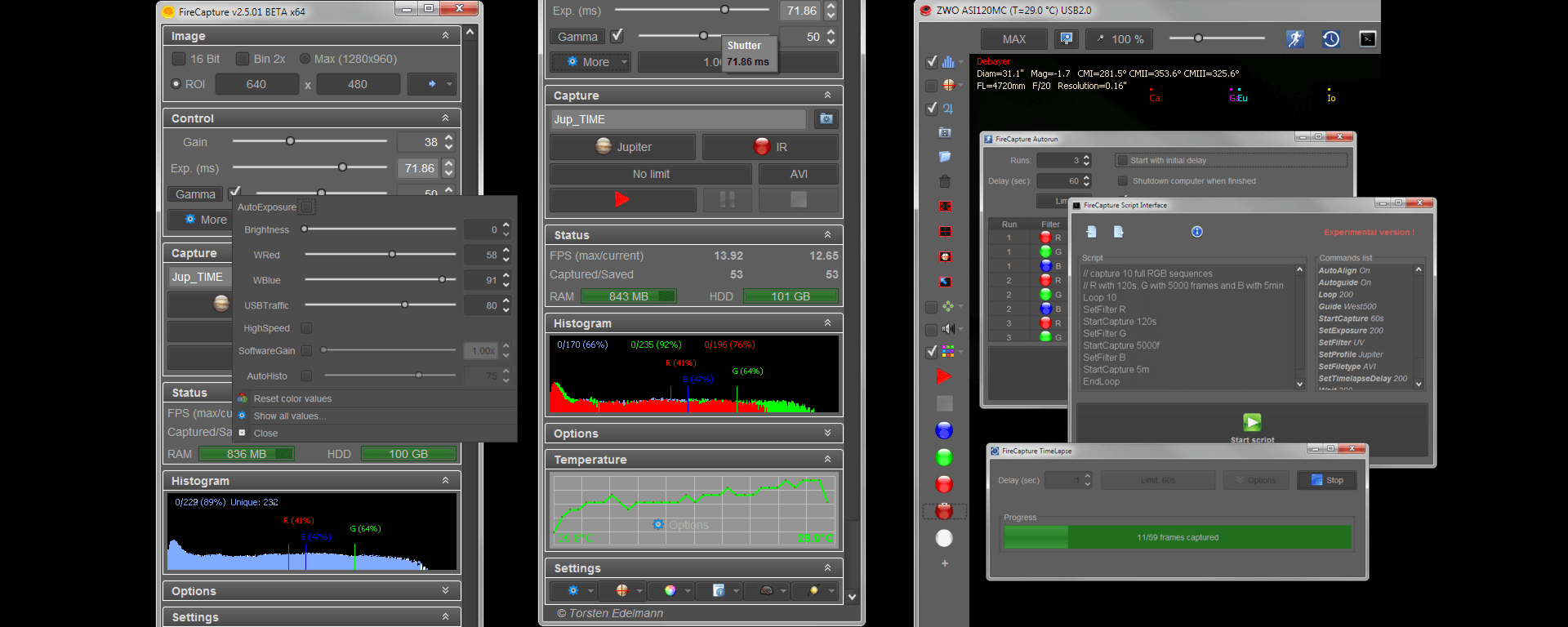
Create profiles for your capture targets and store all camera settings

Define your own set of filters

Various interfaces to connect your scope
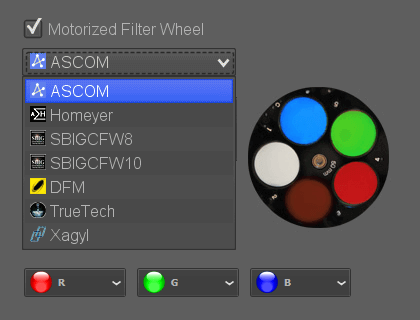
Wide range of motorized filterwheels supported
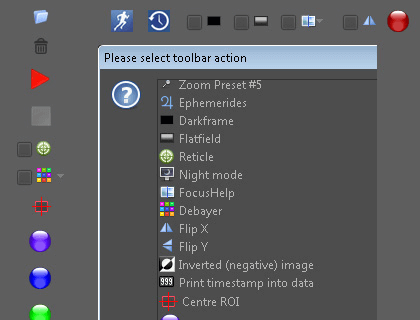
Fully customizable horizontal and vertical toolbar
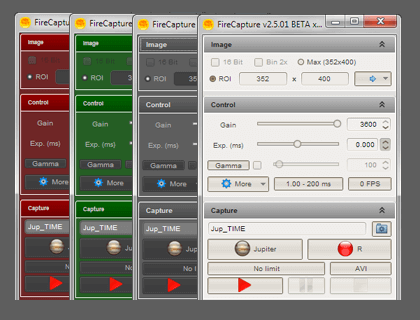
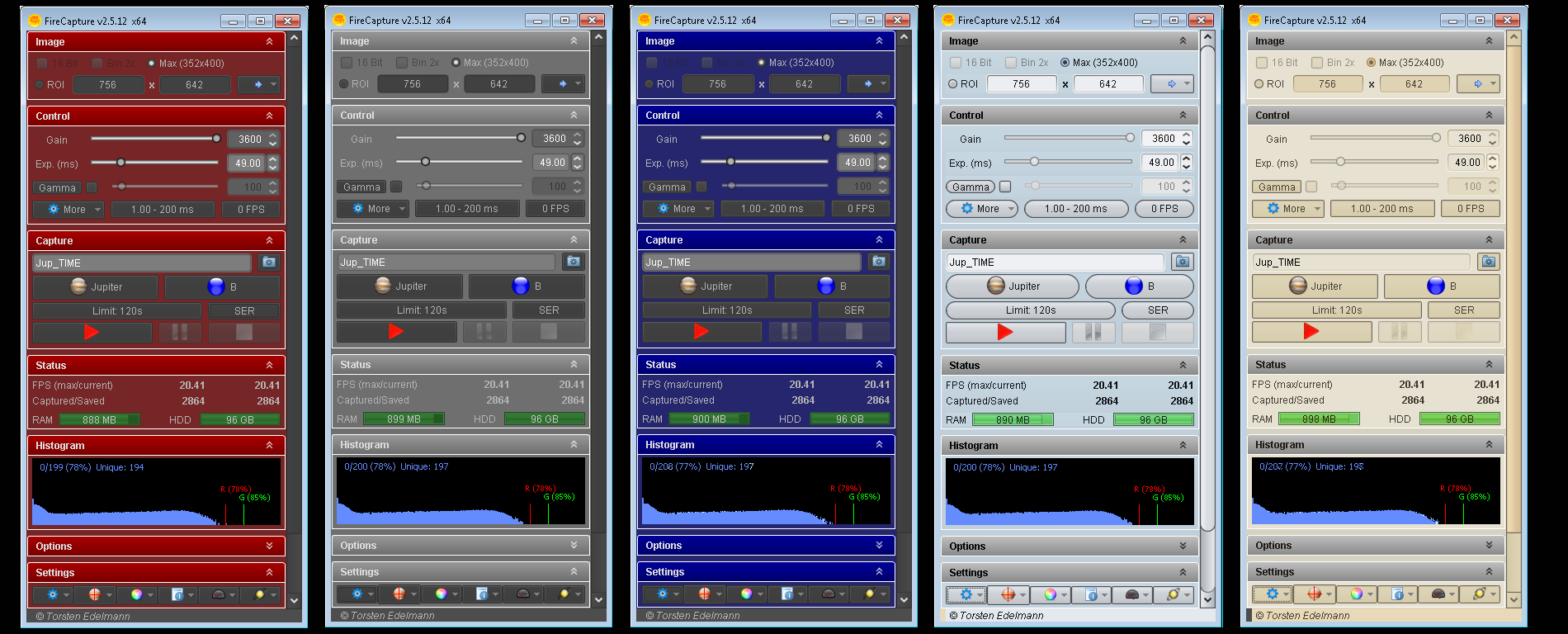
Fully customizable UI, different L&F and night mode colors

Keep the planet on the sensor during capture
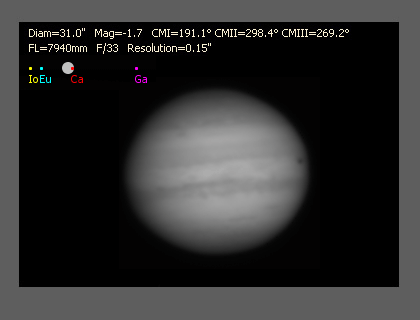
Show ephemerides and calculate effective focal-length

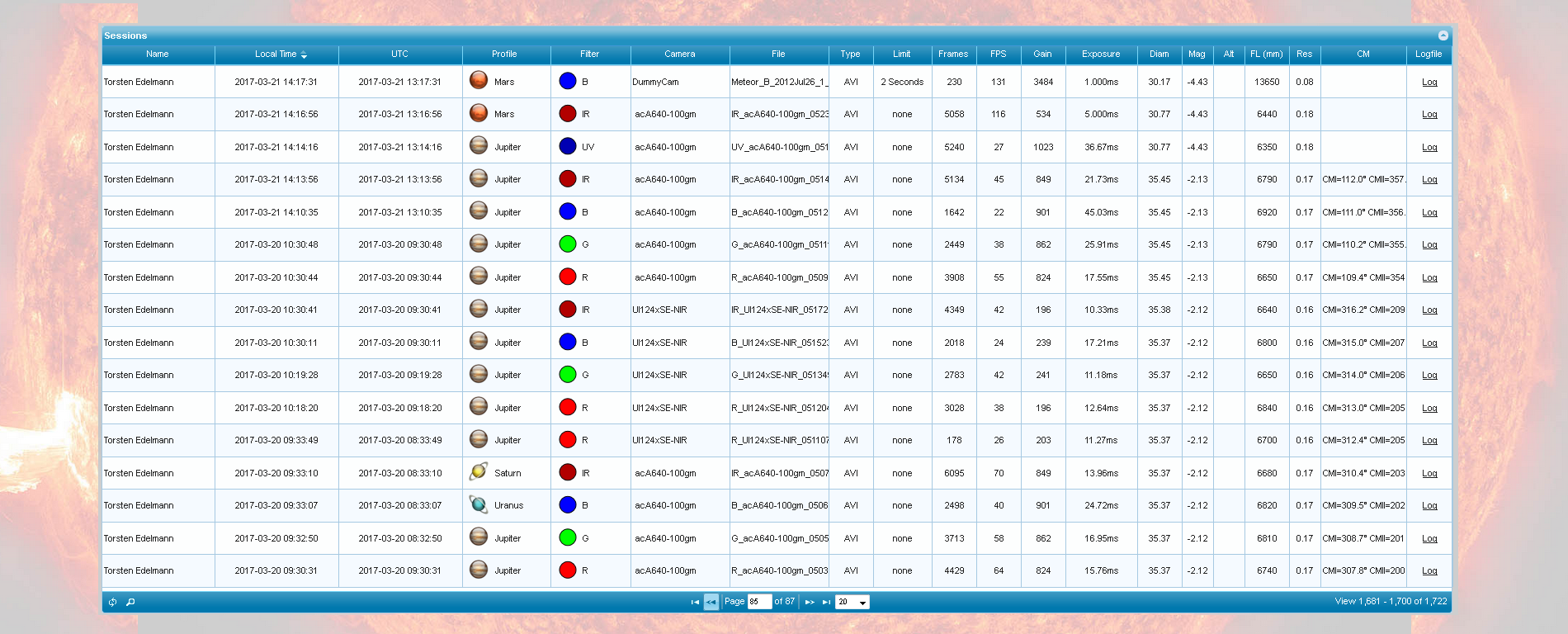
History of all capture details

Automated image capture

Take automated timelapse series
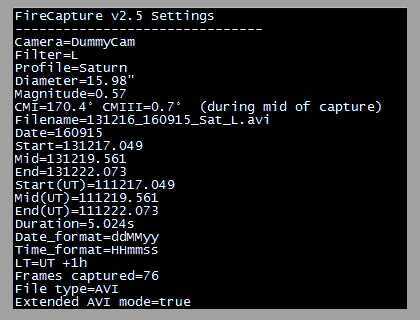
Log file including all camera and capture parameters
It was back in 2008 when I got hold of a SONY newsletter announcing a new CCD sensor (ICX618) which promised fantastic sensitivity. Still working with an old webcam those days I instantly had the idea of replacing the webcam sensor with the new SONY sensor. It took weeks and dozens of emails to get the confidential spec of the new sensor. When I saw the sensitivity values it was clear: I had to have this sensor! The Basler Scout scA640 was the first machine vision camera on the market using this sensor and when I bought it the nightmare began: the included software was useless for planetary imaging and running the camera with the VRecord webcam tool was a complete PITA. Bugged by the inability to store even the basic camera settings I decided developing my own capture software.
What started as a solely private project soon turned into higher gear when fellow astronomers saw the software and insisted on getting it. I decided to make it public, included new camera interfaces and after years of continuous development FireCapture has evolved to one of the leading planetary capture tools. Developing the thing is only one part of the story: with a supportive community of users behind me I always had the feeling of someone 'looking over my shoulder' during the countless hours of programming. I can't mention all but just want to say:
Thank you guys !